
Rhinoplasty in Spain for international patients
Aesophy Excellence Clinic · Málaga, Spain
Nasal shape and breathing need to be assessed together. The bridge, tip, nostrils and septum contribute differently to the appearance and function of the nose. A request to reduce a dorsal hump may require a different plan from a request to refine a broad tip or correct asymmetry.

What your clinical assessment examines
The consultation examines the skin envelope, cartilage support, nasal valves and septum, as well as previous trauma or surgery. Frontal, profile and basal views help the surgeon understand proportions without assuming a single ideal shape. Digital simulation can facilitate communication but is not a prediction of the final result.
| Decision point | What to confirm |
|---|---|
| Function | Nasal obstruction, septum and valve assessment |
| Structure | Bridge, tip, cartilage and nasal support |
| Previous surgery | Operative records and possible reconstruction |
Treatment options and techniques
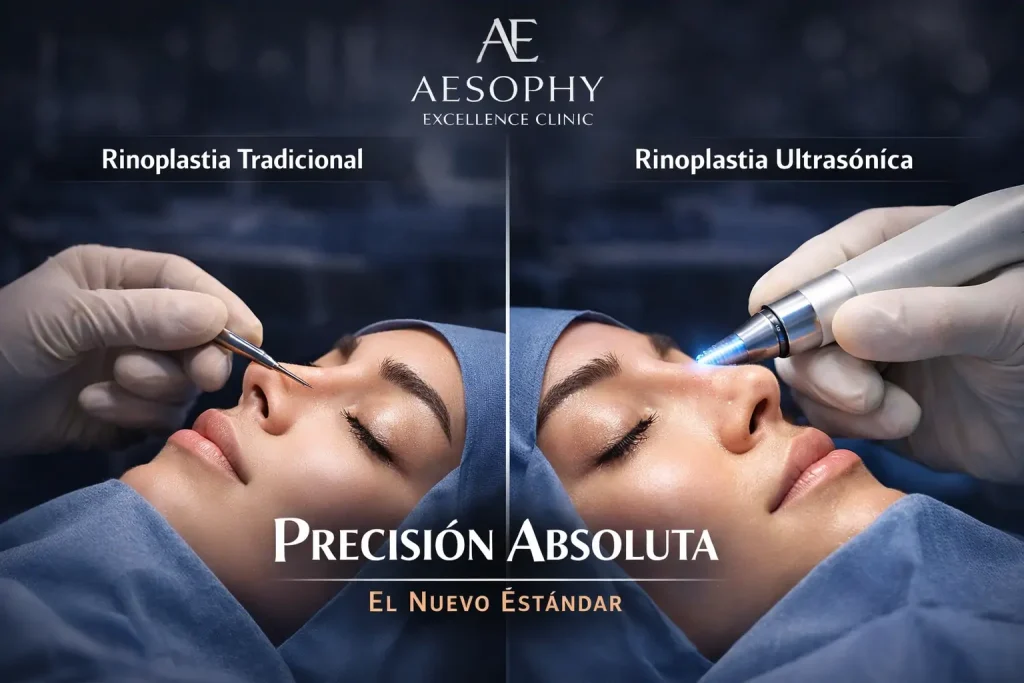
Open or closed access is selected according to the structures requiring correction. Cartilage grafts may be needed for support; bone reshaping is only one component. Ultrasonic instruments may be considered for selected bony changes, while functional complaints may require a separate airway assessment.

The difference between a cosmetic concern and a functional concern
A nasal tip that looks broad in a frontal photograph is not necessarily the same problem as a nose that feels blocked on one side. Aesthetic concerns may be related to skin thickness, cartilage shape or the relationship between the nose and chin. Functional problems may involve the septum, nasal valves or other structures. Tell the clinician whether breathing changes with exercise, sleep or seasons, and whether you have had nasal injury. Investigations may be appropriate before the surgical plan can be finalised.
Planning the bridge, tip and profile
A photograph of a preferred profile can be a useful starting point for discussion. The surgeon needs to consider whether a requested reduction would leave adequate structural support. Tip refinement, rotation and projection influence appearance from multiple angles, so the plan should not focus on a single side view. Thick skin can obscure fine definition, while thin skin may reveal small irregularities. These are examples of anatomical limitations rather than reasons to guarantee a particular result.
Choosing between a primary and a revision pathway
A previous operation changes the information needed before a decision. A patient who has undergone rhinoplasty elsewhere may require reconstruction rather than straightforward reshaping, even if the apparent concern is small. Obtain the previous surgeon’s report and relevant imaging, and explain changes in symptoms since the operation. If the previous procedure is recent, the specialist may recommend observation rather than immediate revision. This is a separate pathway from primary nasal surgery.
What a realistic surgical quotation should describe
The estimate should identify whether functional assessment, structural reconstruction, graft harvesting or an additional procedure is involved. Ask what consultation, anaesthesia, facility and planned postoperative visits are included. A remote estimate can change after examination; a transparent quotation should explain how such changes are handled. The cost of an additional night or medical review after your return belongs in the broader travel budget.
Risks, limitations and individual recovery
Swelling, bruising, temporary obstruction and changes in sensation may occur. Risks include bleeding, infection, persistent breathing difficulty, asymmetry and dissatisfaction requiring further assessment. Final refinement can take many months, especially at the tip.

Planning your visit and return journey
Ask how a splint or sutures will be managed, when an examination is required and how to deal with nasal blockage on returning home. Do not arrange travel that prevents the surgeon from checking healing.
Your treating professional
Dr Adriana Rodríguez García. The clinic identifies the appropriate professional during assessment. Ask for current registration, relevant qualifications and the actual treatment location before consenting.
Costs and the written proposal
Ask for a personalised quotation after assessment, including relevant clinical fees, facility or material costs, prescribed aftercare and scheduled reviews. A remote estimate may change after examination. Allow for travel, accommodation and additional care if needed. No fixed price or recovery duration is promised on this page.
See the international cost guide and how to compare itemised quotations.

Frequently asked questions
Can simulation guarantee my nose shape?
No. It is a communication tool, not a promise of healing or symmetry.
Can breathing be assessed at the same consultation?
Yes, describe obstruction and previous nasal injuries; a physical examination may be necessary.
Can I confirm a treatment date from overseas?
Request an initial assessment first. Confirm which examinations and in-person consultations are necessary, and whether a review must take place before you can travel home. A travel reservation does not establish medical suitability.
Planning photographs and functional assessment
A profile photograph alone cannot show the entire nasal framework or establish the cause of breathing difficulties. A useful assessment considers the front, side and base of the nose together with skin thickness, existing asymmetries, support and the patient’s history. A previous fracture, septal operation or cosmetic rhinoplasty may change the surgical plan. Tell the surgeon about persistent obstruction, side-to-side differences and any previous investigations. The need for further examinations depends on the findings.
What a simulation can and cannot tell you
A simulation may help communicate whether the desired change concerns projection, rotation, bridge shape or overall balance. It cannot predict how the skin will settle over modified cartilage, how scars will mature or whether subtle asymmetry will persist. Compare the simulated discussion with a clear explanation of the actual surgical manoeuvres under consideration. The final consent should be based on the procedure and its uncertainties, not the edited image.
A return itinerary that accommodates nasal care
The first local follow-up can be important for checking the condition of the nasal tissues and any dressings. Ask for an appointment schedule before selecting accommodation and flights. Discuss how you would obtain an examination if obstruction, bleeding or unusual pain develops. Keep a written record of the procedure and any graft material or functional work. A travel date is not a substitute for an individual assessment of readiness to fly.
Questions to resolve before paying a deposit
Is the proposed operation primary or revision? Does it include airway assessment or a separate functional procedure? Which elements of the bridge or tip are expected to change? Are anaesthesia, facility fees and postoperative appointments included? What happens if the planned operation changes after physical examination? These questions help distinguish a meaningful surgical proposal from an advertised package.
Explore related information
Ultrasonic rhinoplasty in Spain
Ultrasonic instruments can be used for selected work on nasal bone.
Revision rhinoplasty after previous surgery
Revision nasal surgery may involve scar tissue, changed anatomy or a functional problem.
Dr Adriana Rodríguez García: facial surgery consultations
The clinic’s Spanish profile describes Dr Adriana Rodríguez García’s work in facial surgery, including rhinoplasty.
Rhinoplasty recovery and travel planning in Spain
The first postoperative review and any splint or suture care should form the basis of a rhinoplasty itinerary.
What changes an international rhinoplasty quotation?
A rhinoplasty quotation can change with the clinical scope, including functional concerns, revision surgery or additional assessment.
Further patient information
Independent resources for general background; these do not verify Aesophy-specific protocols.
Discuss your individual assessment
Tell Aesophy which concern you would like assessed and where you are travelling from. Confirm the consultation process before arranging treatment or sending clinical information.
General information for informed discussion, not individual medical advice. The medical team must confirm suitability, risks and follow-up. For a medical emergency in Spain call 112.