
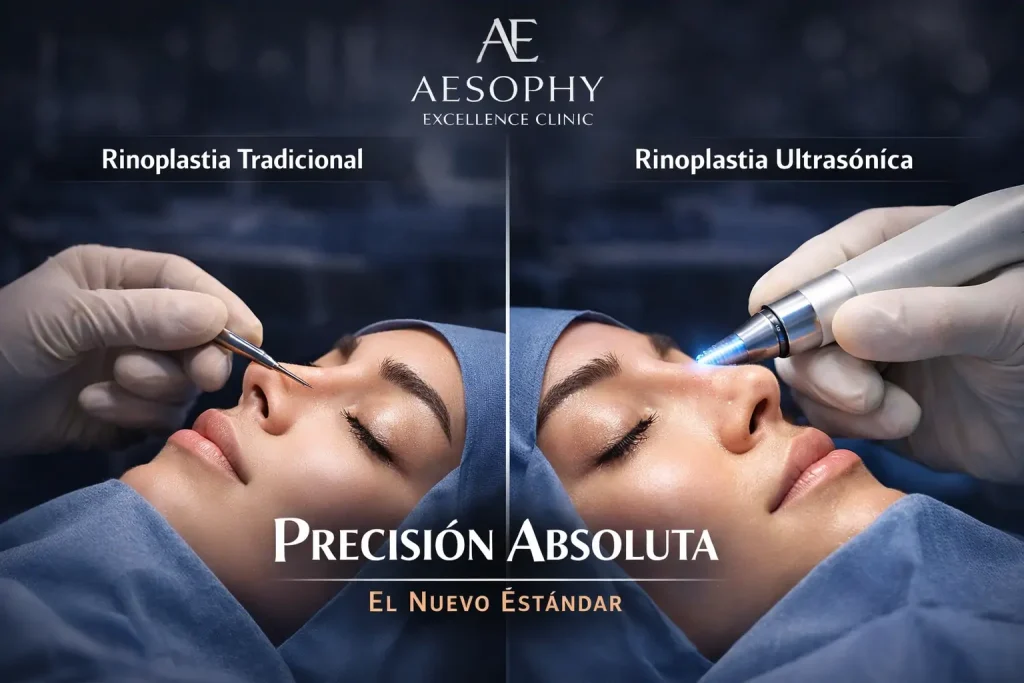
Revision rhinoplasty after previous surgery
Aesophy Excellence Clinic · Málaga, Spain
A second nasal operation addresses concerns after previous rhinoplasty, which can include structural instability, asymmetry, breathing changes or a result that has not met expectations. Revision is usually more complex than a first procedure.
What your clinical assessment examines
Bring the previous operative report, photographs, information on grafts or implants and a description of how symptoms evolved. Scar tissue, skin quality and remaining cartilage determine what is feasible. The surgeon may recommend waiting until tissues have stabilised.
| Decision point | What to confirm |
|---|---|
| History | Previous operative report, grafts and dates |
| Timing | Has healing stabilised enough for reassessment? |
| Reconstruction | Possible donor cartilage and limits |
Treatment options and techniques
Reconstruction may require grafts from available cartilage sites, release of scar tissue or restoration of structural support. An improvement in appearance is not always compatible with every requested change; functional priorities must be clear.

Risks, limitations and individual recovery
Further scarring, persistent obstruction, donor-site issues, asymmetry and incomplete correction are possible. Another operation cannot guarantee reversal of all previous changes.

Planning your visit and return journey
Plan for extra assessment before surgery and a flexible stay. Obtain the original surgical records in advance, and agree which clinician will monitor symptoms once you return.
Your treating professional
Dr Adriana Rodríguez García. The clinic identifies the appropriate professional during assessment. Ask for current registration, relevant qualifications and the actual treatment location before consenting.
Costs and the written proposal
Ask for a personalised quotation after assessment, including relevant clinical fees, facility or material costs, prescribed aftercare and scheduled reviews. A remote estimate may change after examination. Allow for travel, accommodation and additional care if needed. No fixed price or recovery duration is promised on this page.
See the international cost guide and how to compare itemised quotations.

Frequently asked questions
Can I travel immediately for a correction?
Only after assessment; early swelling may obscure the final result of the previous procedure.
Will I need a graft?
That depends on remaining support and the reconstructive plan.
Can I confirm a treatment date from overseas?
Request an initial assessment first. Confirm which examinations and in-person consultations are necessary, and whether a review must take place before you can travel home. A travel reservation does not establish medical suitability.
Explore related information
Rhinoplasty in Spain for international patients
Rhinoplasty modifies nasal structures for aesthetic and, when indicated, functional objectives.
Dr Adriana Rodríguez García: facial surgery consultations
The clinic’s Spanish profile describes Dr Adriana Rodríguez García’s work in facial surgery, including rhinoplasty.
Medical records to request before returning home
A written record of an overseas procedure helps another clinician understand what has been done if further care is needed.
Rhinoplasty recovery and travel planning in Spain
The first postoperative review and any splint or suture care should form the basis of a rhinoplasty itinerary.
Further patient information
Independent resources for general background; these do not verify Aesophy-specific protocols.
Discuss your individual assessment
Tell Aesophy which concern you would like assessed and where you are travelling from. Confirm the consultation process before arranging treatment or sending clinical information.
General information for informed discussion, not individual medical advice. The medical team must confirm suitability, risks and follow-up. For a medical emergency in Spain call 112.