Ultrasonic or conventional rhinoplasty: questions for your surgeon
Comparisons
Ultrasonic or conventional rhinoplasty: questions for your surgeon
Aesophy Excellence Clinic · Málaga, Spain · International patient journal
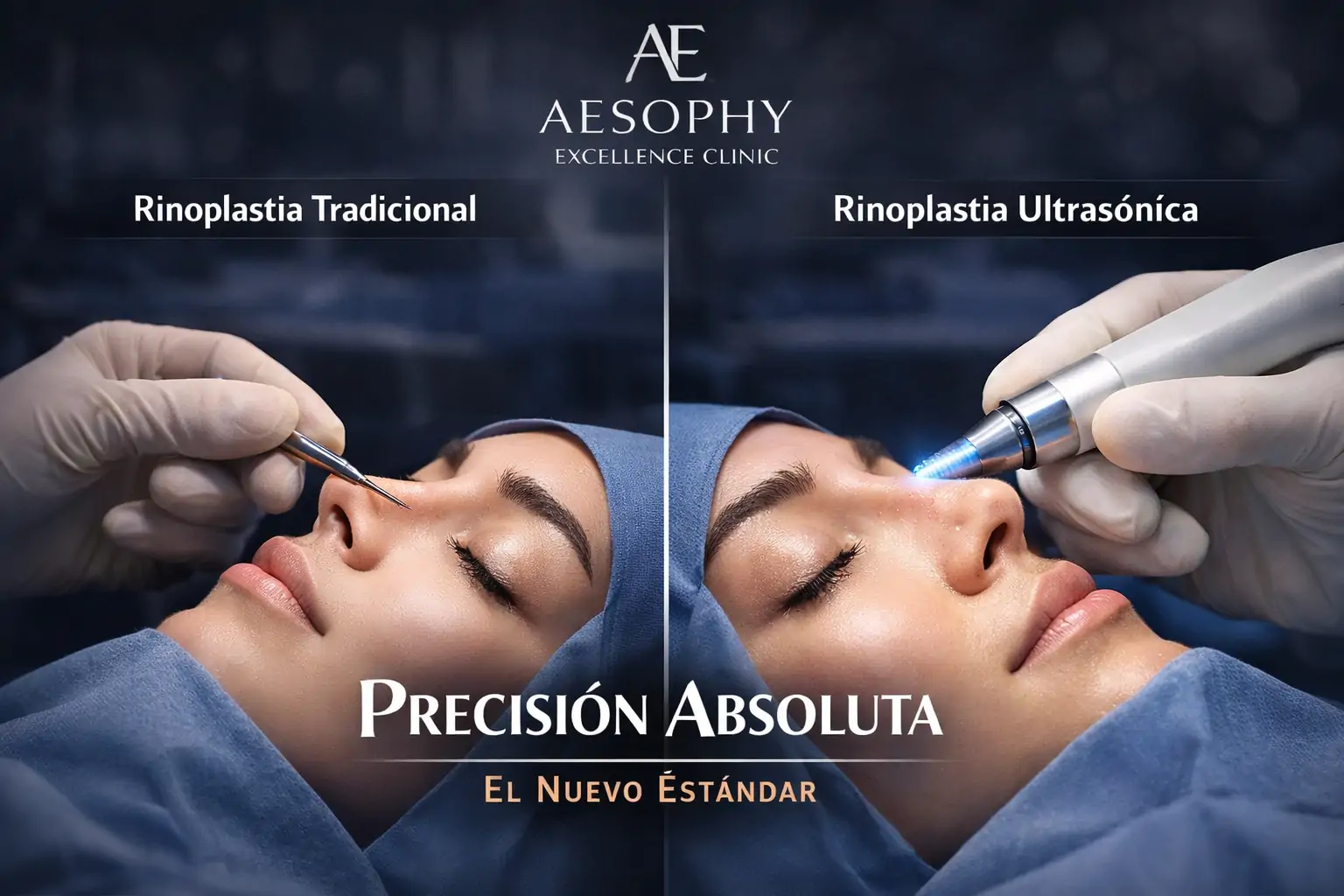
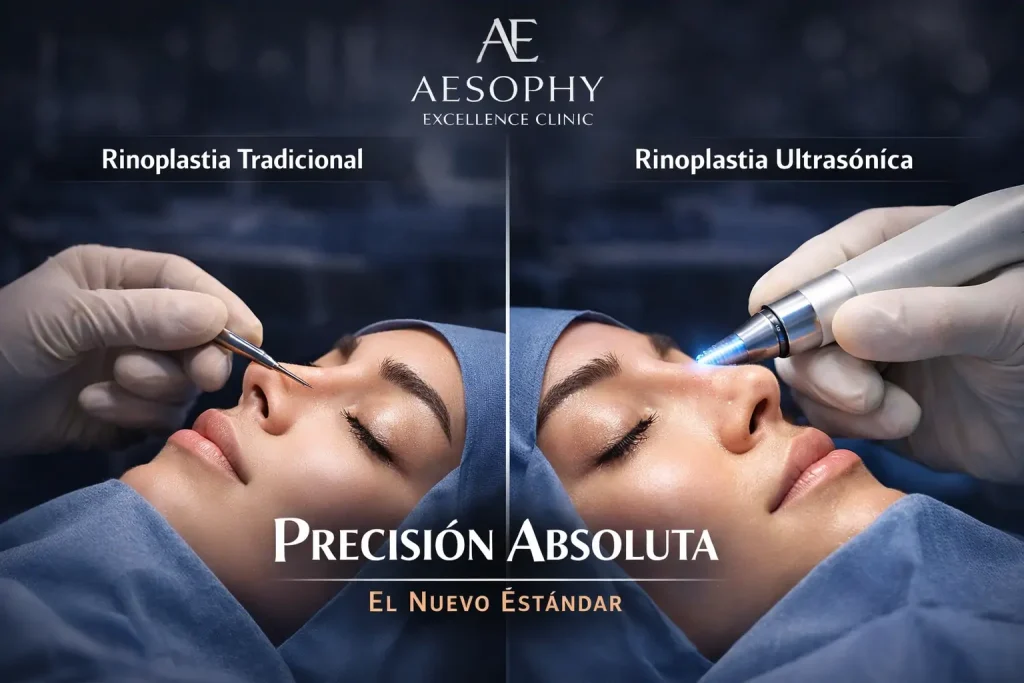
Ultrasonic tools can assist selected nasal bone changes; conventional instruments remain part of many approaches. Both may require cartilage work and a functional assessment.
What to ask about anatomy
A bony hump, broad vault and tip asymmetry involve different structures. Ask which concern the proposed technique addresses, and how the surgeon will preserve or restore support.
Claims about recovery
Do not interpret use of a particular instrument as a guarantee of less bruising, a better result or earlier flights. Healing depends on the complete procedure, tissues and individual response.
Example: tip refinement versus bone correction
A patient whose main concern is nasal-tip shape may need cartilage-focused planning, whereas a patient with a bony hump may require more bone work. An ultrasonic instrument may play a role in the second plan but is not a complete answer to the first. Ask which structures contribute to your concern and which instrument is proposed for each part of the surgery.
What to compare
Compare expected structural changes, airway considerations, incision access, risk of asymmetry and required follow-up. If one proposal uses an ultrasonic label and another does not, ask whether the actual intended correction differs. This is more informative than comparing the technique names in isolation.
Choosing a surgeon
Ask for the reasoning behind the proposed method, experience with the relevant type of surgery, risks and alternatives. A device name is not a substitute for professional qualifications or follow-up.
| Decision point | What to confirm |
|---|---|
| Clinical scope | Record the precise procedure and indication for each proposal. |
| Professional and setting | Identify the treating clinician and facility. |
| Aftercare and costs | Compare written inclusions, restrictions and continuity of care. |
Explore related information
Ultrasonic rhinoplasty in Spain
Ultrasonic instruments can be used for selected work on nasal bone.
Rhinoplasty in Spain for international patients
Rhinoplasty modifies nasal structures for aesthetic and, when indicated, functional objectives.
Rhinoplasty recovery and travel planning in Spain
The first postoperative review and any splint or suture care should form the basis of a rhinoplasty itinerary.
Dr Adriana Rodríguez García: facial surgery consultations
The clinic’s Spanish profile describes Dr Adriana Rodríguez García’s work in facial surgery, including rhinoplasty.
Further patient information
Independent resources for general background; these do not verify Aesophy-specific protocols.
Discuss your individual assessment
Tell Aesophy which concern you would like assessed and where you are travelling from. Confirm the consultation process before arranging treatment or sending clinical information.
General information for informed discussion, not individual medical advice. The medical team must confirm suitability, risks and follow-up. For a medical emergency in Spain call 112.