
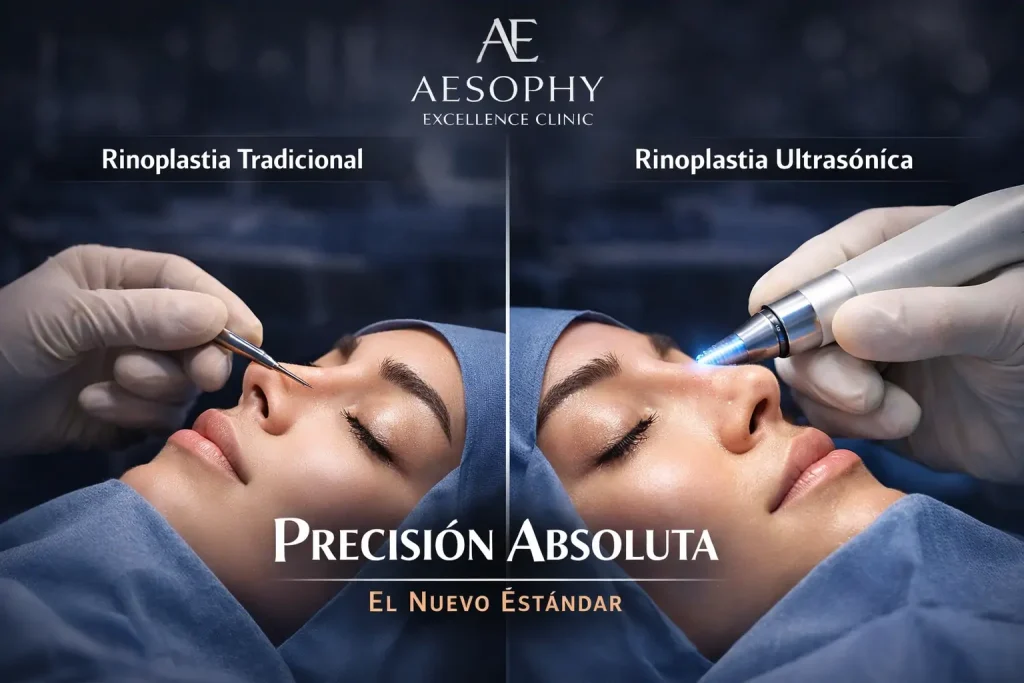
Ultrasonic rhinoplasty in Spain
Aesophy Excellence Clinic · Málaga, Spain
Ultrasonic rhinoplasty describes the use of piezoelectric instruments to work on nasal bone. It is not a separate operation for every part of the nose. Patients considering travel should clarify what role bone reshaping has in their individual plan.

What your clinical assessment examines
A prominent bridge, asymmetry after trauma or a broad bony vault may prompt assessment of the bony framework. The surgeon must also examine the tip, cartilage, skin and airway, since a bone-focused instrument cannot resolve every concern.
| Decision point | What to confirm |
|---|---|
| Bone | Which nasal bone changes require an instrument? |
| Cartilage | What tip or support work is also required? |
| Recovery | What reviews and splint care are planned? |
Treatment options and techniques
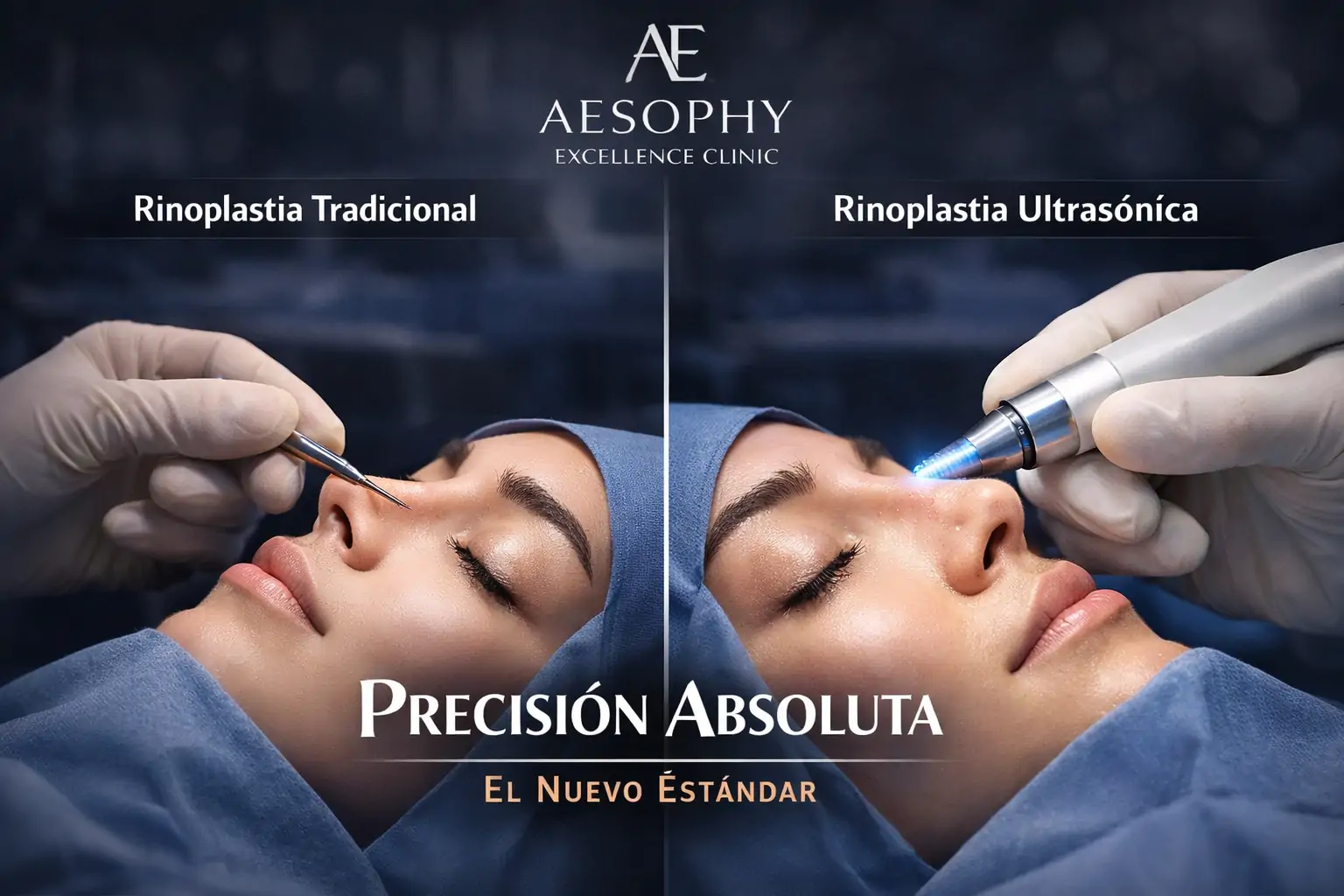
Piezoelectric instruments deliver controlled mechanical vibrations to cut or shape bone. Conventional instruments remain appropriate for some cases; either approach can be combined with cartilage work. The choice depends on anatomy, surgical access and professional judgement, not the name of the device.

Risks, limitations and individual recovery
The technique does not eliminate bruising, swelling, bleeding, infection or the possibility of an unsatisfactory result. Avoid treating claims about a shorter recovery as a reason to book an earlier flight.
Planning your visit and return journey
Ask the surgeon to explain which structures will be treated ultrasonically, what other techniques are required and whether follow-up differs from conventional rhinoplasty.
Your treating professional
Dr Adriana Rodríguez García. The clinic identifies the appropriate professional during assessment. Ask for current registration, relevant qualifications and the actual treatment location before consenting.
Costs and the written proposal
Ask for a personalised quotation after assessment, including relevant clinical fees, facility or material costs, prescribed aftercare and scheduled reviews. A remote estimate may change after examination. Allow for travel, accommodation and additional care if needed. No fixed price or recovery duration is promised on this page.
See the international cost guide and how to compare itemised quotations.

Frequently asked questions
Is ultrasonic surgery always better?
No. The tool is useful for particular tasks; the whole surgical plan matters.
Does it mean no swelling?
No. Recovery still depends on the operation and the person.
Can I confirm a treatment date from overseas?
Request an initial assessment first. Confirm which examinations and in-person consultations are necessary, and whether a review must take place before you can travel home. A travel reservation does not establish medical suitability.
Explore related information
Rhinoplasty in Spain for international patients
Rhinoplasty modifies nasal structures for aesthetic and, when indicated, functional objectives.
Ultrasonic or conventional rhinoplasty: questions for your surgeon
The distinction concerns instruments used during selected stages of nasal surgery, rather than two universally applicable operations.
Dr Adriana Rodríguez García: facial surgery consultations
The clinic’s Spanish profile describes Dr Adriana Rodríguez García’s work in facial surgery, including rhinoplasty.
Rhinoplasty recovery and travel planning in Spain
The first postoperative review and any splint or suture care should form the basis of a rhinoplasty itinerary.
Further patient information
Independent resources for general background; these do not verify Aesophy-specific protocols.
Discuss your individual assessment
Tell Aesophy which concern you would like assessed and where you are travelling from. Confirm the consultation process before arranging treatment or sending clinical information.
General information for informed discussion, not individual medical advice. The medical team must confirm suitability, risks and follow-up. For a medical emergency in Spain call 112.